11.2% Dollar Term Growth, a $1 Trillion Target, and a Question About 2027: Tinubu Courts Global Investors in Paris
Summary
President Bola Ahmed Tinubu met with a high powered assembly of global investors in Paris, France on Tuesday, May 5, 2026 the first major diplomatic stop on his three nation tour pitching Nigeria’s reform credentials to representatives from Citibank, Amundi, Ninety One, BlueCrest, Kirkoswald Capital, Principal Finisterre, Prudential Global Investment Management, and Mesarete Capital. Finance Minister Taiwo Oyedele disclosed that Nigeria recorded 11.2% GDP growth in dollar terms in 2025 the strongest such figure in years and reaffirmed the government’s ambition to build a $1 trillion economy by 2030. DMO Director General Patience Oniha assured investors of the country’s responsible debt management approach. In a telling exchange, one investor asked Tinubu about his post 2027 agenda to which the President promised policy consistency, fiscal discipline, and transparency
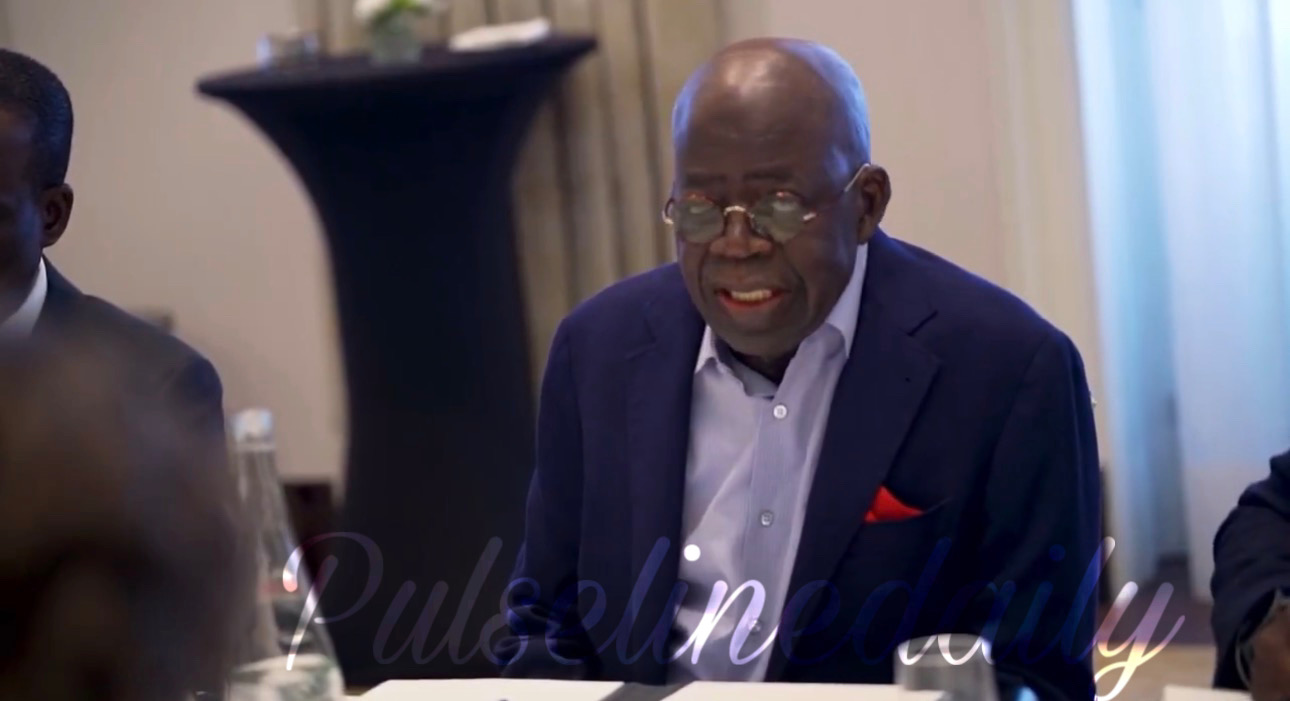
President Bola Tinubu met with global investors in Paris, France, on Tuesday, May 5, 2026, emphasising transparency, fiscal discipline, and the rationale behind his administration’s swift implementation of bold economic reforms. The meeting the first substantive diplomatic engagement of his three nation tour brought together some of the world’s most influential financial institutions in a room that Nigeria needed to impress.
Attendees included representatives from major global financial institutions, including Citibank and France’s Amundi, led by Valerie Baudson. Other attendees included representatives from BlueCrest, British and South African based Ninety One, Kirkoswald Capital, Principal Finisterre, and US groups Prudential Global Investment Management and Mesarete Capital. The composition of the room spanning European, American, and African based fund managers reflected the breadth of the investment community Nigeria is courting as it positions itself for the next phase of economic growth.
Finance Minister Taiwo Oyedele led the economic pitch, highlighting that Nigeria recorded 11.2% GDP growth in dollar terms in 2025 a record that reinforced the country’s ambition to achieve a $1 trillion economy by 2030. The dollar term framing of the growth figure is significant it reflects not just volume expansion but the appreciation of the naira’s purchasing power in global terms, a metric that matters enormously to foreign investors whose returns are ultimately measured in hard currency. Oyedele emphasised the government’s near term priority of translating macroeconomic reforms into tangible results for ordinary Nigerians, and pledged to publish quarterly financial data a commitment to transparency that the investor community had long demanded.
Director General of the Debt Management Office Patience Oniha assured investors of the government’s responsible approach to debt financing and its focus on sustainable debt management a reassurance directed at an audience acutely aware of Nigeria’s rising debt profile and the pressure it places on fiscal headroom.
Tinubu said his economic reform programme includes measures to remove economic distortions and stabilise macroeconomic indicators, laying the foundation for sustained inclusive growth. He also committed to deepening reforms, enhancing transparency across the oil value chain, and implementing a multi pronged security strategy, including police decentralisation and disrupting terrorist financing.
“The focus remains on policy stability and diligent execution to ensure these strategic shifts translate into concrete benefits for all Nigerians,” President Tinubu said.
The meeting’s most revealing moment came when an investor asked Tinubu directly about his agenda beyond 2027 effectively asking the President to speak to what Nigeria looks like under a second Tinubu term. He promised to strengthen fiscal discipline and transparency, and to deliver policy consistency. The exchange was a reminder that investors do not simply buy a country’s present they bet on its future governance trajectory. Tinubu’s answer, brief as it was, was designed to convey that the reform architecture being presented in Paris would outlast the current electoral cycle.
Investors at the meeting commended the transformative nature of the reforms and expressed optimism regarding Nigeria’s trajectory.
Analysis
The Paris investor meeting is one of the most important diplomatic performances of Tinubu’s presidency not because of who was in the room, but because of what the room represents. The fund managers and institutional investors gathered in Paris on Tuesday manage trillions of dollars in assets. Their allocation decisions how much of their portfolio flows toward Nigeria versus other emerging markets are shaped by exactly the kind of direct presidential engagement, economic data presentation, and policy commitment messaging that Tuesday’s meeting was designed to deliver. The 11.2% dollar-term GDP growth figure is the headline number Oyedele chose to lead with and it is strategically chosen. Investors in Paris are not primarily concerned with naira denominated growth that gets eroded by currency depreciation. They want to know whether Nigeria’s economy is expanding in real, globally comparable terms. An 11.2% dollar term growth figure answers that question with the kind of confidence that a press release cannot generate. Tinubu explained that his economic reform programme includes measures to remove market distortions and stabilise macroeconomic indicators, arguing these steps are essential for laying the foundation for sustained inclusive growth. The removal of fuel subsidy and the unification of exchange rate windows both painful domestically are the specific distortion removal measures that give this room the most comfort. These are changes that global investors have been demanding of Nigeria for over a decade. The fact that they have been implemented, and that the macroeconomic indicators are beginning to reflect their impact, is a credible story to tell in Paris. The pledge to publish quarterly financial data is the commitment that deserves the most follow through attention. Investor confidence in Nigeria has historically been eroded not by the absence of reform intentions but by the absence of verifiable, timely, and consistent data with which to measure reform progress. Quarterly financial reporting would change that calculus materially making Nigeria’s fiscal performance trackable in real time rather than retrospectively. If the pledge is honoured, it will do more for Nigeria’s investment profile than any single policy announcement made on the tour.
Tags