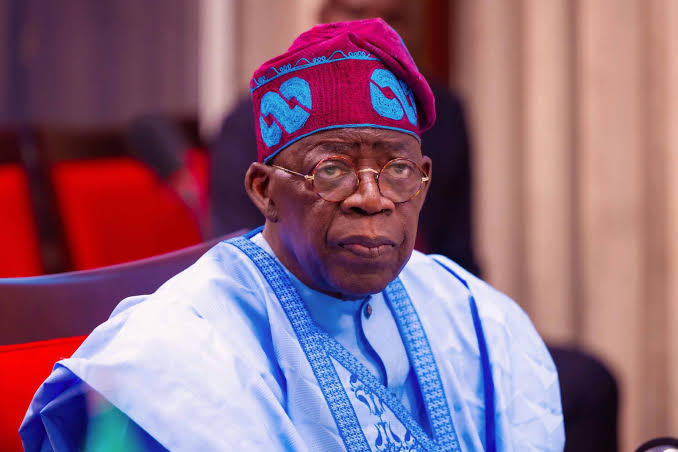
₦1.7 Trillion on Credit—Tinubu's $1.25bn World Bank Loan Push Six Months Before Election Raises Questions Nigeria Deserves Answers To
Summary
The Tinubu administration is in advanced negotiations with the World Bank for a fresh $1.25 billion loan equivalent to approximately ₦1.70 trillion at current exchange rates with the proposed facility scheduled for board approval on June 26, 2026, just six months and 21 days before Nigeria's January 16, 2027 presidential election. The proposed facility, titled Nigeria Actions for Investment and Jobs Acceleration, is designed to support access to finance, digital and electricity services, and strengthen competitiveness through tax, trade, and agriculture reforms. The World Bank itself has assessed the overall risk of the programme as high explicitly citing political and governance risks ahead of the 2027 elections, with pressures it warned could delay or reverse sensitive reforms.
The loan has a name. It has a date. And it has a timing that no amount of policy language can make look accidental.
The proposed $1.25 billion facility titled Nigeria Actions for Investment and Jobs Acceleration is expected to be presented to the World Bank Board of Executive Directors for approval on June 26, 2026, according to World Bank Programme Information Documents reviewed by journalists. That date falls six months and 21 days before the January 16, 2027 presidential election, based on INEC's revised electoral timetable. It is not the first time the Tinubu government has gone to the World Bank. It is, by some measures, barely even newsworthy at this point. But the scale, the timing, and the World Bank's own risk assessment make this one different.
Between June 2023 and May 2026, the World Bank approved approximately $9.35 billion in loans and credits for Nigeria across sectors including power, healthcare, education, agriculture, social protection, renewable energy, MSME financing, and economic reforms. Major packages included the $2.25 billion RESET and ARMOR reform financing in June 2024, the $1.57 billion HOPE and SPIN programmes in September 2024, and the $1.08 billion education and resilience package in March 2025. If the new $1.25 billion facility is approved, total World Bank commitments under the Tinubu administration will rise to approximately $10.6 billion in three years. That's a figure worth reading twice.
Nigeria's external debt stood at $51.86 billion as of December 31, 2025. Total public debt has climbed to $110.97 billion. Approval and full disbursement of the new facility would push Nigeria's external debt stock to roughly ₦77 trillion and could tip the total public debt burden beyond ₦160 trillion. These are not abstract numbers. They are obligations that future administrations and future generations will be required to service.
The World Bank's own internal risk assessment is the most damning element of this story. "Overall, the risk to this DPF is assessed as high. Political and governance risks are elevated ahead of the 2027 elections, with pressures that could delay or reverse sensitive reforms," the bank's document states. Additional risks identified include weak institutional coordination, election-related spending pressures, fiduciary challenges, vulnerability to oil price fluctuations from the Middle East conflict, inflationary pressures, and social tensions associated with trade and economic reforms. In other words: the institution lending the money has publicly said it does not fully trust the environment in which that money will be managed. And it is lending anyway.
The programme has two core pillars. The first targets access to finance, digital services, and electricity supporting the Investment and Securities Act 2025, credit enhancement facilities, the National Digital Economy Bill, a national metering framework, and private participation in mini-grids. The second focuses on competitiveness through trade, tax, and agriculture reforms including reducing trade barriers, improving seed supply, implementing VAT e-invoicing, and establishing a minimum effective corporate tax rate. (Dailyintelnewspaper) On paper, the objectives are unimpeachable.
The implementation question is where things get complicated. Many of the previously approved World Bank facilities are not immediately disbursed releases are tied to the fulfilment of specific reform and policy conditions, often leading to significant gaps between approval and actual money hitting Nigerian accounts. That reality prompted Nigeria's Accountant-General, Shamseldeen Ogunjimi, to issue an unusually blunt warning. "If approvals take more than six months, the Nigerian Government may no longer honour such arrangements," he said urging the World Bank to expedite approval and disbursement timelines, stressing that because the facilities are repayable loans and not grants, delays disrupt implementation and undermine development objectives. It is a strange thing to threaten the institution you are simultaneously asking for money. But that is, apparently, where Nigeria's relationship with the World Bank currently stands.
Economists are divided. Lagos-based economist Adewale Abimbola argued that concessionary loans from multilateral institutions can support growth if channelled into productive sectors. "Borrowing isn't bad; what matters is utilisation," he said. But development economist and CEO of CSA Advisory, Dr Aliyu Ilias, questioned the rationale for additional borrowing despite government claims of improved revenues following the subsidy removal warning that the debt trajectory remains unsustainable if domestic revenue mobilisation doesn't accelerate in parallel.
On social media, the reaction was less measured. "Nigeria government is just moving like someone that collected LAPO with the intentions of spending the money on a burial ceremony," one user wrote. Another asked: "Why World Bank dey give them money when they know the government is not using it for what they asked for?" Crude, perhaps. But not entirely off the mark as a summary of public sentiment.
Analysis
Let's be honest about what the timing of this loan application signals and what it doesn't. It doesn't, by itself, prove that the Tinubu administration is borrowing to fund campaign spending. Development Policy Financing from the World Bank comes with conditions, tranches, and reform benchmarks that make it structurally difficult to simply redirect into vote buying operations. That's not how DPF works. Critics who imply otherwise are simplifying a complex instrument for political effect. But the timing does matter and not just because of the election. It matters because of what the World Bank said about it. When a multilateral lender assesses its own facility as high-risk and specifically cites pre-election political pressures as a driver of that risk, it is not making a neutral technical observation. It is documenting, on the record, its concern that the reforms this money is meant to support may be compromised by electoral calculations. That concern from the institution writing the cheque is damning whether the government intends to misuse the funds or not. $10.6 billion in World Bank commitments in three years is an extraordinary number. For context, Buhari's entire eight year administration secured far less in comparable multilateral financing. The Tinubu government has moved faster, borrowed larger, and justified each facility with reform language that is largely consistent with what the World Bank wants to hear. Whether that language is matching reality on the ground whether the subsidy removal, the exchange rate unification, the revenue reforms are actually producing the kind of inclusive growth that would justify this pace of external borrowing, is the central question that neither the government nor the World Bank's programme documents have fully answered. Nigeria's debt service obligations are already consuming a grotesque share of federal revenue. Debt to GDP is moving in the wrong direction. And the opposition now better organised in the NDC than at any point in the Tinubu era will make every one of these numbers a campaign issue between now and January 2027. The ₦1.7 trillion loan might well support digital infrastructure, agricultural competitiveness, and financial inclusion exactly as advertised. Or it might arrive late, disbursed in tranches, tied to conditions that stall implementation, and produce the same gaps between approval headline and on the ground impact that every previous facility has produced. The World Bank knows both of those outcomes are possible. It said so in its own risk assessment. Nigeria deserves a government that acknowledges the same.
Tags