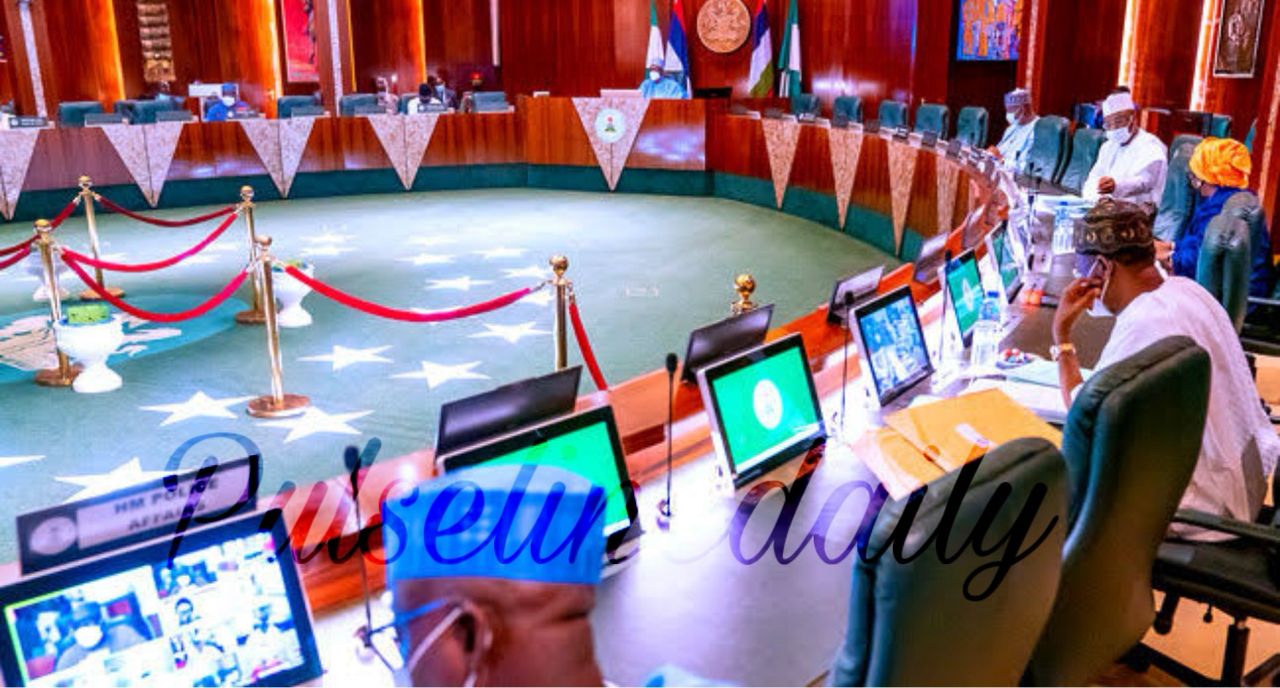
FEC Approves $2.99bn Contracts for Lagos Green Line, Kano Metro, and Kaduna Light Rail.
Summary
Nigeria's Federal Executive Council has approved contracts worth $2.99 billion for three major rail projects across Lagos, Kano, and Kaduna states. The approval, announced by the Minister of Finance and Coordinating Minister of the Economy, Taiwo Oyedele, covers Phase 1A of the Lagos Green Line Rail, the Kano Metro City Rail, and the Kaduna State Light Rail. The projects are designed to ease urban congestion, boost economic productivity, and improve living standards in three of Nigeria's most strategically significant cities.
Nigeria's Federal Executive Council approved contracts worth $2.99 billion for three rail projects across Lagos, Kano, and Kaduna states on Thursday. The announcement came at a post-council briefing at the State House in Abuja, where Finance Minister Taiwo Oyedele said the approvals align with the federal government's commitment to infrastructure that drives productivity, economic growth, and improved quality of life.
The approved projects include Phase 1A of the Lagos Green Line Rail, the Kano Metro City Rail Project, and the Kaduna State Light Rail System. The three locations were selected due to their strategic importance as economic hubs where targeted investments could deliver significant returns.
The Lagos Green Line is arguably the most high-profile of the three. It is designed to run from Marina on Lagos Island through the Lekki corridor one of sub-Saharan Africa's densest commercial and residential areas and beyond, making it one of the most anticipated segments of the Lagos metropolitan rail network.The project has long been on the drawing board as Lagos continues to grapple with severe traffic congestion that costs the city billions of naira in lost productivity annually.
In the north, the Kano Metro City Rail and the Kaduna Light Rail target two of northern Nigeria's most economically significant urban centres, with the goal of easing congestion and supporting commerce. These cities serve as major commercial, industrial, and population hubs for the entire northern region, and improved rail connectivity is expected to open up new economic opportunities for residents and businesses alike.
On financing, the projects will be funded through the Ministry of Finance Incorporated (MOFI), with counterpart funding arrangements. Oyedele also confirmed that the projects have already been captured in the extended 2025 budget and are expected to strengthen the capital component of the overall investment framework.
The rail approvals were not the only major decisions at the council session. FEC also approved contracts for road and bridge projects worth over ₦7 trillion, comprising 10 major projects spanning all six geopolitical zones, including a ₦1.86 trillion extension of the Lagos-Calabar Coastal Highway through Akwa Ibom State and a ₦548.98 billion contract to demolish and fully rebuild the Carter Bridge in Lagos.
Analysis
The Federal Executive Council's approval of nearly $3 billion in rail contracts signals one of the most ambitious infrastructure pushes Nigeria has undertaken in recent years, and its significance extends well beyond the tracks themselves. By targeting Lagos, Kano, and Kaduna simultaneously, the Tinubu administration is making a calculated bet that connecting these three economic engines will produce multiplier effects that ripple outward to smaller cities and towns that depend on them for trade, employment, and services. The Lagos Green Line, in particular, has the potential to be transformative. The Lekki corridor is already home to one of West Africa's fastest growing concentrations of real estate, tech firms, and financial services, yet it remains chronically underserved by public transport. A functioning rail link from Marina to Lekki could meaningfully reduce commute times, lower the cost of doing business, and make the corridor more accessible to a wider income bracket not just the car owning class. The northern projects carry their own weight. Kano and Kaduna together represent the economic heartbeat of northern Nigeria, and both cities have struggled with infrastructure gaps that have contributed to slower growth relative to the south. Rail investment here is as much a political statement as an economic one, a signal that federal development priorities are not exclusively southern. That said, Nigeria has a well documented history of infrastructure announcements that stall between approval and completion. The key questions going forward are whether counterpart funding arrangements are robust enough to survive budget cycles and whether project timelines will be rigorously enforced. If these projects are executed to completion, they could redefine urban mobility in Nigeria. If they follow the pattern of previous rail ambitions, the $2.99 billion figure will become another line in a long list of unfulfilled promises. For now, the approval is a meaningful first step but the real measure of success will come at commissioning, not at the briefing room.
Tags