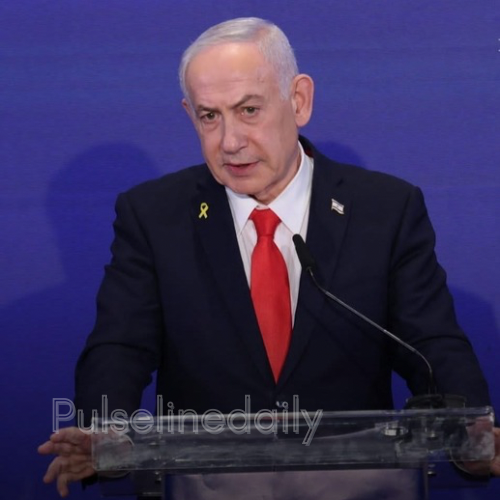
Netanyahu Reveals Secret Prostate Cancer Treatment, Says Disease Has Disappeared
Summary
Israeli Prime Minister Benjamin Netanyahu disclosed on Friday that he was quietly diagnosed with and treated for early stage prostate cancer, with his doctors now confirming no detectable signs of disease following radiation therapy. The disclosure came via his annual medical report and a personal post on social media, months after the treatment concluded.
Israeli Prime Minister Benjamin Netanyahu announced on Friday, April 25, 2026, that he had been diagnosed with and treated for early-stage prostate cancer a diagnosis he chose to keep from the public while undergoing treatment.
The disclosure came through Netanyahu’s annual medical report, published Friday, which confirmed that the 76 years old leader had received radiation therapy for an early-stage malignant tumor discovered in his prostate.
Netanyahu revealed in a statement on social media that following surgery for an enlarged prostate in December 2024 which was disclosed publicly at the time doctors discovered a malignant tumor of less than one centimeter during a subsequent checkup. His office released two letters from his doctors alongside the announcement. One letter described it as “an early detection of a very small lesion, with no metastases, as all other tests confirmed beyond any doubt.”
The Prime Minister stated he was presented with two options: continue monitoring the tumor without immediate intervention, or proceed with treatment. He chose to act. “When I’m given information in time about a potential danger, I want to address it immediately,” Netanyahu said, adding that he “underwent targeted treatment that removed the problem and left no trace of it.”
Prof. Aron Popovtzer, director of the Sharett Oncology Institute at Hadassah Medical Center, confirmed that Netanyahu began radiation therapy approximately two and a half months ago. Following imaging and blood tests, Popovtzer stated: “We can now say, based on the findings of these tests, that the disease has disappeared. There is no evidence of disease.” He added that Netanyahu will continue routine follow-up monitoring.
As for why the public was not informed at the time of diagnosis, Netanyahu said he requested the delay in publication so the news would not surface “at the height of the war” against Iran, stating he wanted to prevent “more false propaganda against Israel.” He noted that fake, AI-generated images had already circulated on Iranian state media falsely suggesting he had died.
Netanyahu’s medical history in recent years has included several significant procedures. In July 2023, he received a pacemaker following a “transient heart block.” In March 2024, he underwent hernia surgery. He described his current condition as “excellent physical condition,” thanking his medical team and urging Israelis to “take care of your health.”
Analysis
The disclosure of Netanyahu’s cancer diagnosis and treatment raises serious questions that extend well beyond his personal health chiefly, the obligation of world leaders to maintain transparency with the public they govern, even in times of war. Netanyahu’s justification for withholding the diagnosis rests on national security grounds: he did not want adversaries, particularly Iran, to exploit news of his illness during an active military conflict. The reasoning is not without precedent. Leaders have historically managed the disclosure of health information in ways that balance personal privacy with public interest. But Netanyahu’s case pushes that calculus to a significant extreme. A head of government undergoing cancer treatment however early stage while simultaneously directing a war is precisely the kind of information that democratic citizens and institutions arguably have a right to know in real time. The medical picture itself, however, is reassuring. Prostate cancer at an early stage, particularly in men over 70, carries an exceptionally high survival rate. Netanyahu’s oncologist confirmed no evidence of remaining disease following radiation therapy, which is consistent with well established outcomes data for localized prostate cancer. His decision to opt for treatment rather than active surveillance the other option presented to him was a personal one, and by all medical accounts, a successful one. What this episode also underscores is the broader tension between the theater of leadership and its physical reality. Netanyahu, Israel’s longest-serving prime minister, has now weathered a pacemaker implant, hernia surgery, and a prostate cancer diagnosis all while remaining in office. His political durability is remarkable. But the pattern of late or selective disclosure around his health invites scrutiny of whether the Israeli public, and allied governments, are always receiving the full picture when it matters most. The timing of the announcement on the day his annual medical report was released suggests the disclosure was as controlled as the treatment itself. That control may be politically rational, but in democracies, the public’s right to assess the fitness of their leaders cannot indefinitely yield to wartime optics.
Tags