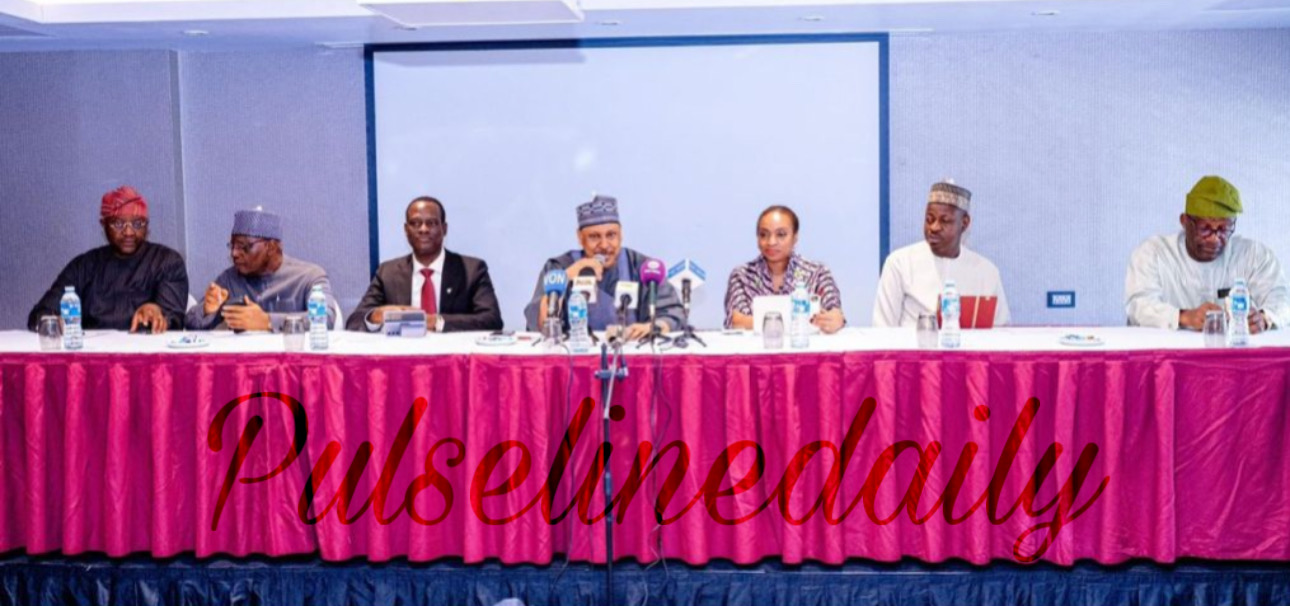
Nigeria Takes Its Reform Story to the World: Ministry of Information Holds Official Briefing for Foreign Media
Summary
Nigeria’s Federal Ministry of Information and National Orientation hosted foreign media organisations operating in the country at a high level interactive briefing session in Abuja on April 23, 2026 presenting the Tinubu administration’s reform scorecard, requesting fair and nuanced coverage of Nigeria’s story, and signalling a deliberate push to reshape the country’s international image as reforms enter a consolidation phase.
In a move that signals the Tinubu administration’s growing attention to how Nigeria is perceived beyond its borders, the Federal Ministry of Information and National Orientation convened an official briefing session with foreign media organisations operating in Nigeria on Thursday, April 23, 2026, in Abuja.
Nigeria’s Minister of Information and National Orientation, Mohammed Idris, addressed foreign media organisations at the interactive session, highlighting the country’s ambitious reforms and commitment to transparency, economic renewal, and stronger international partnerships. “We are embarking on the most comprehensive set of structural reforms in decades, under the leadership of President Bola Ahmed Tinubu,” the Minister stated.
Economic Progress on Display
Among the key highlights from the Minister’s address, he cited Nigeria’s real GDP growth of 3.87% in 2025 — marking a reversal of years of stagnation and, for the first time in nearly a decade, economic growth outpacing population growth, signalling renewed momentum in the nation’s economy.
The minister noted that recent economic data showed signs of recovery, with fiscal adjustments such as subsidy removal and exchange rate unification aimed at strengthening government revenue, with the savings being redirected to critical infrastructure and improved social services.
On security, the Minister noted that enhanced intelligence-led operations have played a significant role in restoring stability across the country, while a new legislative push for state police is helping to return autonomy to local governments. On the social front, major investments in agriculture, education, and youth empowerment are yielding tangible results, with NELFUND’s interest-free student loans and advancements in digital infrastructure creating new opportunities for Nigeria’s youth and workforce.
A Call for Nuanced Global Coverage
Idris called on the international media to report Nigeria’s story with nuance, reflecting both its serious challenges and credible progress. “Accurate reporting requires holding both truths,” he said, adding: “We welcome robust engagement and partnership with the international media as we chart this course of renewal.”
Idris reaffirmed Nigeria’s openness to international collaboration and direct engagement with the global press, noting that robust media relationships are vital to shaping the country’s narrative and supporting its continued transformation.
Economy and Trade Ministers Add Depth
The Honourable Minister of Finance and Coordinating Minister of the Economy, Taiwo Oyedele, explained that Nigeria’s reform journey has now entered a consolidation phase focused on translating policy gains into real impact for citizens. “We have moved from fragility to stability, and now to consolidation, towards productivity and growth that Nigerians will feel in their daily lives,” he noted.
The Honourable Minister of Industry, Trade and
Investment, Dr. Jumoke Oduwole, outlined the government’s strategy to drive economic diversification and position Nigeria at the forefront of Africa’s growth. “Nigeria is not just participating in Africa’s growth — we are positioning ourselves to lead it through trade, investment, and industrialisation,” she said.
The session was attended by Special Adviser to the President on Information and Strategy, Bayo Onanuga; Special Adviser to the President on Public Communication and Orientation, Sunday Dare; and the Senior Special Assistant to the President on Print Media, Abdulaziz Abdulaziz.
Analysis
The decision to formally convene foreign media organisations in an official briefing rather than relying solely on press releases and bilateral diplomatic channels is a calculated and overdue move. Nigeria has long wrestled with a narrative gap: what the government believes is happening within the country and what reaches international audiences are often dramatically different stories. This session is an attempt to close that gap directly, at the source. Minister Idris’s core message to foreign correspondents that “accurate reporting requires holding both truths” is a sophisticated media relations pitch. It acknowledges that Nigeria’s challenges are real, which immediately sidesteps the credibility problem that comes with denial or deflection. It then asks international journalists to ensure those challenges are balanced against equally real evidence of progress. That is a reasonable ask, and it is precisely the kind of framing that experienced communications professionals would recommend to a government with a genuinely mixed but improving story to tell. The economic figures cited carry weight. A 3.87% GDP growth in 2025 that outpaces population growth is a meaningful milestone in the context of Nigeria’s recent history. The fiscal consolidation subsidy removal, exchange rate unification has been painful for ordinary Nigerians, and the administration has been criticised sharply for the cost-of-living consequences. But the macroeconomic architecture that those reforms create is now beginning to yield measurable results, and the government is right to present that evidence to an international audience that may only be aware of the pain, not the progress. What makes this briefing notable is also the roster of ministers present. Having the Finance and Economy Minister alongside the Industry and Trade Minister signals that this was not a communications exercise it was a substantive policy presentation. Foreign correspondents were given access to the people who actually make the decisions, not just the people who explain them. That is a meaningful shift in how the administration is engaging with international scrutiny. The real test, as always, will not be in the session room but on the ground. International media follow evidence. A government that sustains transparent engagement, delivers on its infrastructure commitments, and continues to produce verifiable economic data will find that the international narrative adjusts accordingly and without needing a press briefing to do it.
Tags