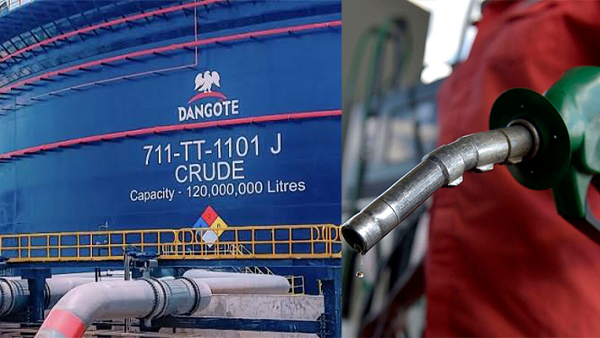
Up, Down, Up Again: How Dangote Refinery's Price Rollercoaster Is Leaving Nigerian Motorists With No Answers
Summary
Nigeria's downstream petroleum market has been thrown into a week of dizzying confusion with Dangote Refinery raising, reversing, and then denying a fuel price hike all within 48 hours, while pump prices across Lagos and Abuja continued climbing regardless. On May 6, the refinery raised its ex-depot price of petrol by ₦75 to ₦1,350 per litre from ₦1,275 its third upward adjustment within a single week. Hours later, a senior refinery official confirmed the reversal, saying the earlier adjustment had been reversed and the gantry price returned to ₦1,275 per litre, citing a sharp drop in global crude oil prices. Then the refinery issued a statement denying any price increase had taken place at all even as retail stations across Nigeria were selling at between ₦1,365 and ₦1,400 per litre.
On Wednesday morning, Nigerians woke up to another fuel price hike. By afternoon, they were told it had been reversed. By evening, the refinery was saying it never happened. And at the filling station down the road, the pump still read ₦1,375.
That, in a sentence, is the state of Nigeria's fuel market right now.
The sequence began when Dangote Refinery announced it was raising its ex-depot price from ₦1,275 to ₦1,350 per litre a ₦75 jump that triggered immediate reactions across the downstream market, with depot owners and marketers quickly revising their pricing templates in anticipation of another nationwide cycle of increases. The adjustment was the third within a single week. Not a month. A week.
The week before, the refinery had already raised prices from ₦1,200 to ₦1,275 per litre, with that hike linked to Brent crude surging above $110 per barrel amid rising tensions from the US-Iran-Israel conflict in the Middle East. NNPCL followed immediately. Outlets across Abuja adjusted pump prices to ₦1,364 per litre from ₦1,295 a ₦69 per litre jump with stations at Gwarimpa, Kubwa Expressway, and Wuse Zones 4 and 6 all affected. MRS, BOVAS, and other independent marketers went even higher, selling at between ₦1,365 and ₦1,370.
Then came the reversal. Brent crude dropped sharply to $101.7 per barrel on Wednesday morning, with WTI falling to $94.11 per barrel and within hours, the refinery rolled back the ₦1,350 price and returned to ₦1,275. A senior official, speaking anonymously, confirmed the rollback. Fine. Except the refinery then issued a public statement saying no increase had taken place in the first place. "Dangote Petroleum Refinery and Petrochemicals Limited wishes to clarify that the price of Premium Motor Spirit remains unchanged, as our ex-depot price continues to remain the same," the statement read.
Which is a curious thing to say when your own officials had confirmed the hike to pricing platforms and marketers just hours earlier.
The broader context makes the confusion worse. In more than two months, retail petrol prices have nearly doubled rising from around ₦900 per litre in early February 2026 to between ₦1,365 and ₦1,375 per litre today. That's not a market adjustment. That's a transformation. And ordinary Nigerians who had no subsidy to cushion the blow and no dollar salaries to absorb the difference are the ones carrying the full weight of it at every filling station queue.
A senior executive within the Dangote Group has said the refinery has been absorbing some costs by subsidising petrol and diesel for the local market. That may well be true. But it is a difficult argument to land when pump prices have doubled in two months and a single week can produce three separate price hikes.
Analysis
The Dangote Refinery is, without question, one of the most consequential infrastructure investments in Nigerian history. That is not in dispute. A 650,000 barrel-per-day refinery that has reduced Nigeria's dependence on imported petrol, created jobs, and begun reshaping the country's downstream market is exactly what Nigeria spent decades saying it needed. Credit where it's due. But something uncomfortable is happening in the price signals coming out of that refinery, and Nigeria's consumers deserve a cleaner explanation than they're currently getting. Three price hikes in a week, followed by a reversal within hours, followed by a public denial that any hike occurred that is not the behaviour of a stable market anchor. It is the behaviour of a pricing mechanism that has not yet found its footing, operating in a deregulated environment without the institutional transparency that deregulation requires. When a refinery raises prices on a Wednesday morning and reverses them by Wednesday afternoon and then says nothing happened the only people absorbing the chaos are the depot owners who already repriced, the marketers who adjusted their templates, and the end consumer who still paid ₦1,400 at the pump regardless. The UAE's recent exit from OPEC and Middle East supply disruptions have added genuine international pressure to crude pricing and those are real variables that any refinery must navigate. The problem isn't that prices are rising; in a fully deregulated market, prices respond to costs, and costs have risen. The problem is the opacity. The reversals without explanation. The denials that contradict what officials confirmed to pricing platforms. In a market where millions of Nigerians make daily financial decisions based on what fuel costs from transport to logistics to food prices that level of communication noise is not a minor inconvenience. It is a governance failure. The Dangote Refinery can be both a national asset and a poorly communicated one. Right now, it appears to be both. Fixing the second doesn't diminish the first. But it would go a very long way toward helping Nigerians trust that the era of domestic refining is working in their interest not just in Aliko Dangote's.
Tags