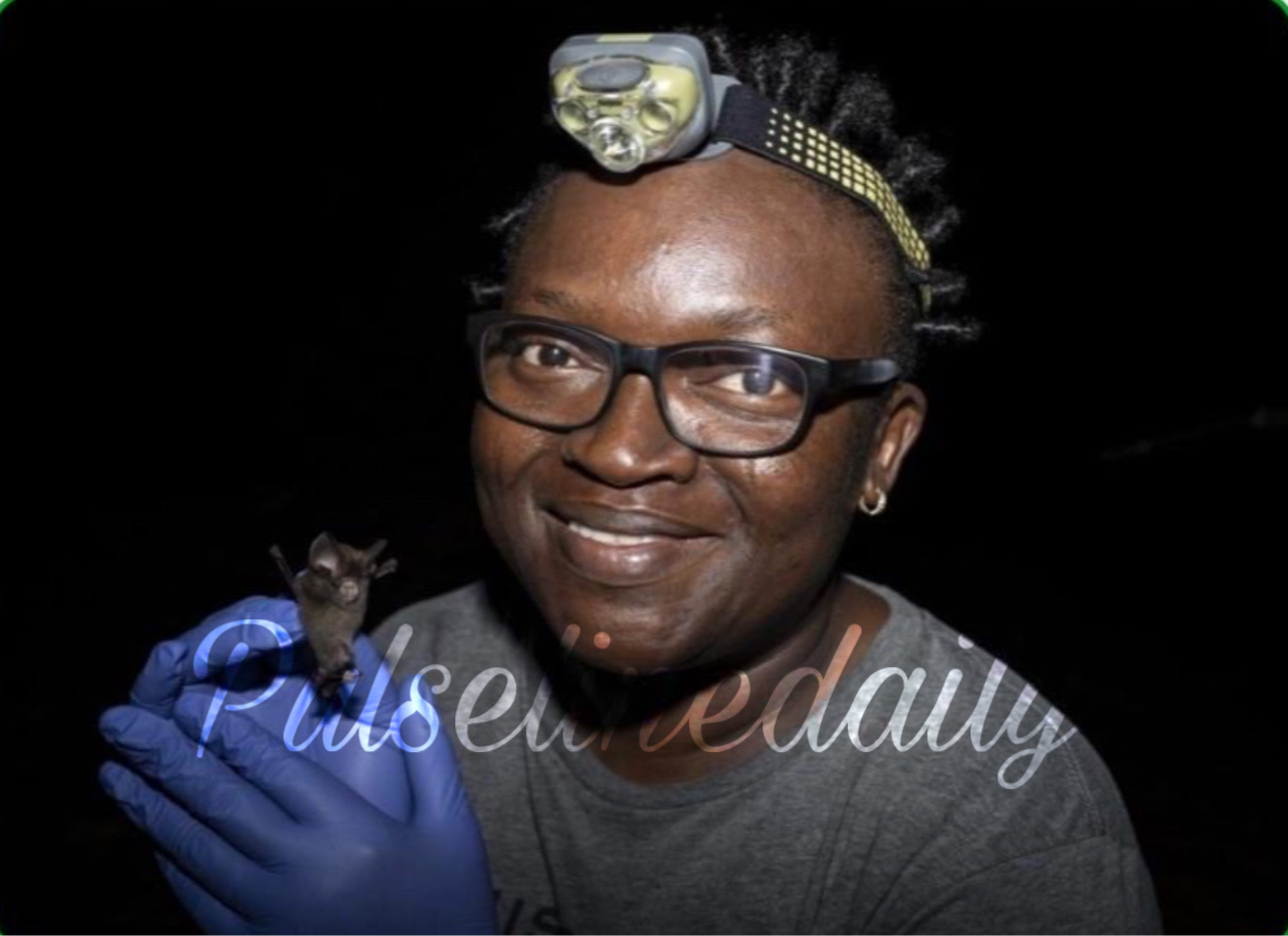
Nigerian of the Week: Dr. Iroro Tanshi The Woman Who Found a Lost Bat Species, Built an Army of Village Firefighters, and Won the World’s Green Nobel Prize
Summary
Dr. Iroro Tanshi, a 41-year-old Nigerian conservation ecologist from Warri, Delta State, has won the 2026 Goldman Environmental Prize widely regarded as the world’s most prestigious honour for grassroots environmental activism, often called the Green Nobel Prize. She is the fourth Nigerian to receive the award. Tanshi was recognised for protecting Nigeria’s only endangered bat species, the short tailed roundleaf bat, rediscovering a colony that had not been recorded in nearly 50 years, and building a community-led wildfire prevention system in and around the Afi Mountain Wildlife Sanctuary in Cross River State that has successfully responded to more than 70 fire outbreaks since 2022. Through her organisation, the Small Mammal Conservation Organization (SMACON), Tanshi has merged rigorous field science with deep community engagement to create one of Africa’s most compelling models of conservation in practice.
She grew up in Warri an industrial, oil soaked city in Nigeria’s south, not the kind of place that typically produces wildlife ecologists. But Iroro Tanshi found her calling early, watching nature documentaries that transported her far beyond the concrete and petroleum flares of her hometown into a world of rainforests, caves, and creatures most Nigerians would cross the street to avoid. Decades later, Dr. Iroro Tanshi, the 41 years old Nigerian conservation ecologist, has won the 2026 Goldman Environmental Prize one of the world’s most respected honours for grassroots environmental work, often called the Green Nobel Prize and the story of how she got there is one of the most remarkable journeys in Nigerian science.
Tanshi was recognised for protecting the endangered short tailed roundleaf bat and helping communities around Cross River State prevent destructive wildfires in and around the Afi Mountain Wildlife Sanctuary. Between 2022 and 2025, her team and local fire brigades responded to more than 70 fire outbreaks and stopped serious wildfires from spreading.
The Cave, the Bat, and the Discovery That Changed Everything
Ten years ago, Iroro Tanshi found something incredible in a cave in Nigeria: a colony of short tailed roundleaf bats a species that hadn’t been seen there in almost 50 years. Her discovery helped kickstart a conservation movement in West Africa to protect rare species of bats from threats like poaching and wildfires.
She and her team had discovered that the caves harboured the short-tailed roundleaf bat, Hipposideros curtus last recorded in the early 1970s and thought to have been extirpated from the region. The rediscovery of a species believed lost to a habitat is a once in a career event for any ecologist. For Tanshi, it became a mandate if this bat had survived against all expectation, it deserved a fighting chance to continue surviving. That conviction set the course of her next decade.
Iroro’s work is now focused on protecting bats and their roosting caves, restoring forest ecosystems, and involving local communities in wildfire mitigation and conservation efforts to promote biodiversity and sustainable livelihoods. In 2016, she co-founded the Small Mammal Conservation Organization (SMACON), where she serves as co-executive director. SMACON is the institutional vehicle through which she has translated a personal scientific passion into organised, measurable, community-rooted conservation action and it is the organisation whose work ultimately won the world’s attention.
The Fire Problem and the Village Solution
Protecting bats in Nigeria is not simply a matter of guarding caves. The short tailed roundleaf bat’s habitat at Afi Mountain is under constant threat from the annual dry season, when farmers across Cross River State’s highland communities traditionally burn land to clear it for planting cacao, maize, and cassava. Those fires, left unchecked, crawl into the sanctuary’s forest destroying roosting trees, killing understory vegetation, and forcing bat colonies to flee or perish.
In five villages near the Afi Mountain Wildlife Sanctuary, the fire season is now also marked by another signal: the sound of metal gongs announcing weather conditions too risky to set fires. In Buanchor and four other villages, organised community fire brigades monitor conditions, sound the alarm when risk is high, and respond collectively when fires break out. This is not a government programme. It is a community system that Tanshi built, trained, and sustained working with five villages near the Afi Mountain Wildlife Sanctuary to prevent dangerous fires since 2022, using the gong system as a community early warning mechanism.
The results are concrete and compelling. Between 2022 and 2025, her team and local fire brigades responded to more than 70 fire outbreaks and stopped serious wildfires from spreading in a region and a country where wildfires have historically gone unchallenged because no one had built the social infrastructure to fight them.
Bats, Stigma, and the Hardest Part of Conservation
Tanshi’s work operates against a cultural current that makes every other challenge harder. In a country where bats are widely feared and associated with supernatural beliefs viewed as harbingers of evil or symbols of witchcraft these misconceptions have made it extremely difficult to implement effective protection measures for bat populations, despite their critical ecological importance.
Tanshi’s innovative approach combines scientific research with community education, working to dispel myths while documenting Nigeria’s diverse bat populations. By engaging directly with communities and traditional leaders, she has begun shifting attitudes toward these misunderstood creatures. The cultural battle she has been fighting is as important as the scientific one because a community that fears and despises bats will not protect them, regardless of what the ecology says. Changing that perception, village by village, elder by elder, is the quiet revolution embedded within her more visible conservation work.
Bats are, in fact, indispensable to the ecosystems Nigerians depend on. They serve as critical pollinators for many plant species, control insect populations, and contribute to the forest regeneration that underpins the agricultural productivity of communities like those around Afi Mountain. Protecting bats is not an abstract environmental concern it is a direct investment in the ecological systems on which human livelihoods rest.
A Prize, a Legacy, and What Comes Next
Tanshi is the fourth Nigerian to win the Goldman Environmental Prize. “By mobilising grassroots community led action, Iroro has created a powerful and positive model in which conservation and community well being are inseparable,” said John Goldman, president of the Goldman Environmental Foundation.
Tanshi received the recognition with characteristic humility: “It’s just beyond words, to be honest. It is a lifetime honour to be recognised by something as prestigious as the Goldman Prize and it means a lot to the work that we do.”
Today, Tanshi continues her conservation and wildfire mitigation work in Cross River State. She and her team have identified at least 10 more bat species in the region over the last two years. They are now designing a programme to scale up firefighting programmes across Nigeria and other countries, expanding the model of conservation and community resilience. The gong and fire brigade system she built around Afi Mountain is not just a local solution it is a template that SMACON believes can be replicated wherever community livelihoods and critical wildlife habitat intersect across the continent.
Analysis
Iroro Tanshi’s story is one that Nigeria almost missed and very nearly allowed the world to discover before it noticed itself. Conservation science does not attract the public attention, private funding, or institutional support in Nigeria that it deserves, and the country’s environmental movement has historically been dominated by oil spill litigation and deforestation advocacy rather than the quieter, more patient work of species protection and ecosystem restoration. Into that gap stepped a woman from Warri who decided that bats mattered and proved, over the course of a decade, that the right combination of scientific rigour, community trust, and stubborn optimism could protect a species that the world had assumed was already gone. The Goldman Prize does not simply reward good intentions. It recognises demonstrated, measurable, grassroots environmental impact the kind that changes land use, shifts community behaviour, and produces ecological outcomes that field surveys can verify. Tanshi’s 70 plus wildfire responses, her rediscovery of a species lost for half a century, her identification of 10 additional bat species in two years, and the zero-wildfire dry seasons her community brigades have produced are exactly those kinds of outcomes. The prize is deserved in the most literal sense: she did the work, and the work produced results. What makes her achievement particularly resonant in the Nigerian context is the model it demonstrates for conservation in a country where both ecological urgency and institutional capacity are unevenly distributed. Tanshi did not wait for government infrastructure to catch up with the threat. She went into the villages, learned what the communities needed, built a system that served both the bats and the farmers, and made conservation economically and culturally compatible with the lives of the people who live alongside the wildlife she is protecting. That is not just good ecology. It is good governance and it is precisely the approach that Nigeria’s conservation sector needs more of, urgently and at scale. Her plans to expand the firefighting model nationally and across borders are the next chapter of a story that is still very much being written. Nigeria owes Dr. Iroro Tanshi more than a week’s recognition. It owes her a movement.
Tags